Stuck in Your Head? Fast Painting Exercises That Create Momentum
Every painter hits that moment where we’re thinking more than we’re moving. The surface feels intimidating, decisions feel heavy, and suddenly we’re stuck in our own heads. When that happens, the goal isn’t to make a masterpiece—it’s to create motion.
Why Fast Painting Exercises Work
One of the simplest ways to break creative block is to divide our time into two short rounds: five minutes of instinct, followed by five minutes of observation. The first round builds momentum. The second builds awareness. Separating those two phases keeps us from judging the work too early while still training our eye.
Using Value Studies to Strengthen Structure
Limiting color can be especially powerful. Working mostly in black and white forces us to focus on value contrast and composition. Without color to lean on, we start seeing structure more clearly. Strong value relationships are what hold a painting together, and practicing them in quick studies strengthens everything we do later.
Restoring Energy with Bold Color
On the other end of the spectrum, using bright, saturated color restores energy. Bold color demands decisive marks. If we hesitate, it turns muddy fast. That pressure encourages faster decisions and reminds us that intensity only works when it’s intentional.
Collage as a Tool for Letting Go
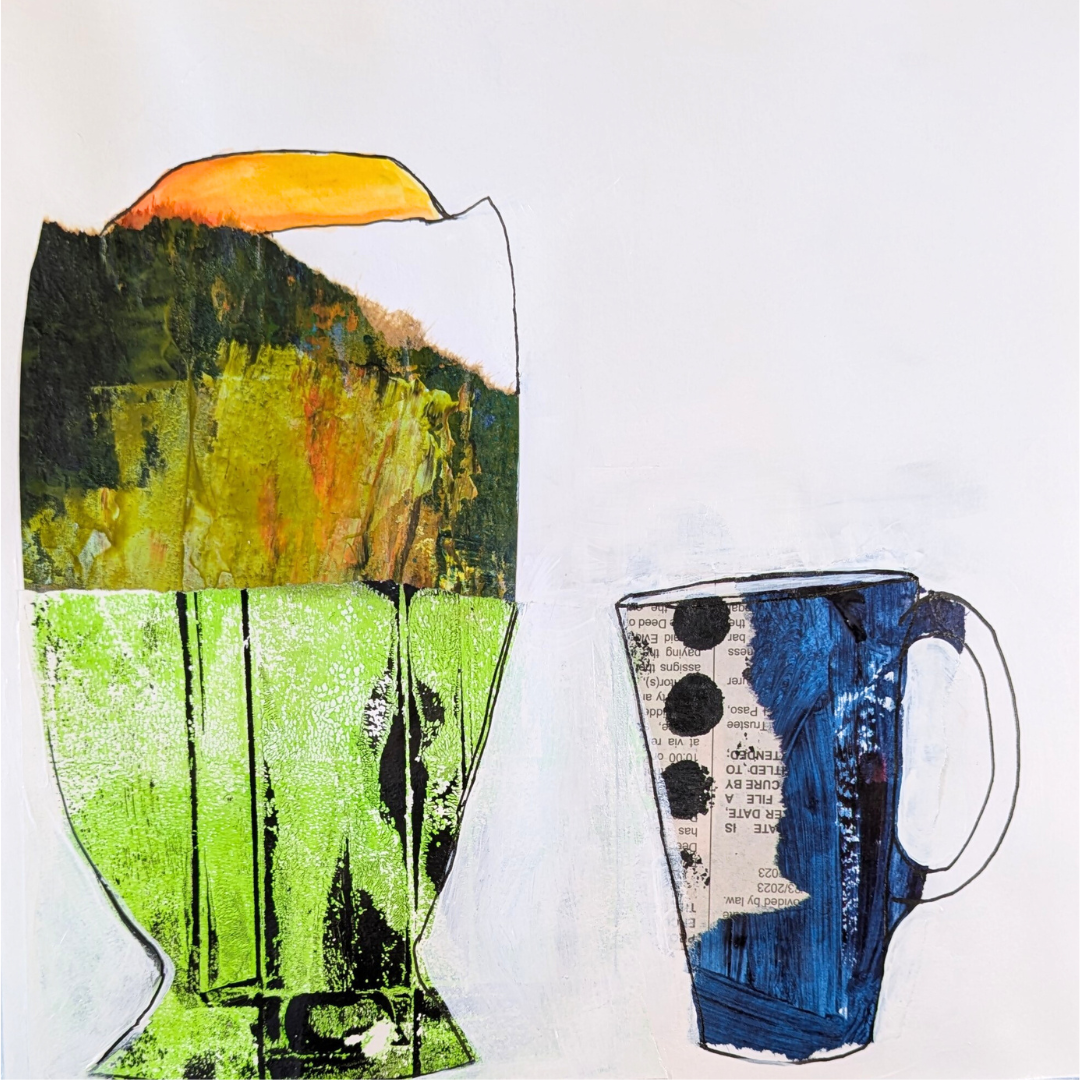
Collage offers another way out of overthinking. Torn paper instantly removes precision and preciousness. Once shapes are already on the surface, we’re responding instead of planning. A partially built surface invites action in a way a blank one rarely does.
Moving First, Refining Second
The real power of fast painting exercises isn’t the finished piece—it’s repetition. Quick studies help us experiment without attachment. We can analyze them, learn from them, and move forward. Sometimes getting unstuck isn’t about better ideas. It’s about moving first and refining second.
And often, that shift from thinking to doing is all we need.
Frequently Asked Questions About Breaking Creative Block
How do fast painting exercises help break creative block?
Fast exercises shift the focus from outcome to action. By limiting time and simplifying decisions, artists move from overthinking to momentum, which helps restore creative flow.
Why is working in black and white helpful for abstract painters?
Black and white painting strengthens value contrast and composition. Removing color allows artists to see structure clearly and build stronger foundations.
Can bright colors help when I feel stuck?
Yes. Bright, saturated colors encourage faster, more confident decisions. They bring energy back into the process and reduce hesitation.
Why is collage effective for getting unstuck?
Collage introduces unpredictability. When shapes already exist on the surface, artists respond instead of plan, which reduces overthinking.
How long should a warm-up painting exercise last?
Short sessions—around 10 to 30 minutes—are ideal. The goal is momentum and awareness, not a finished piece.