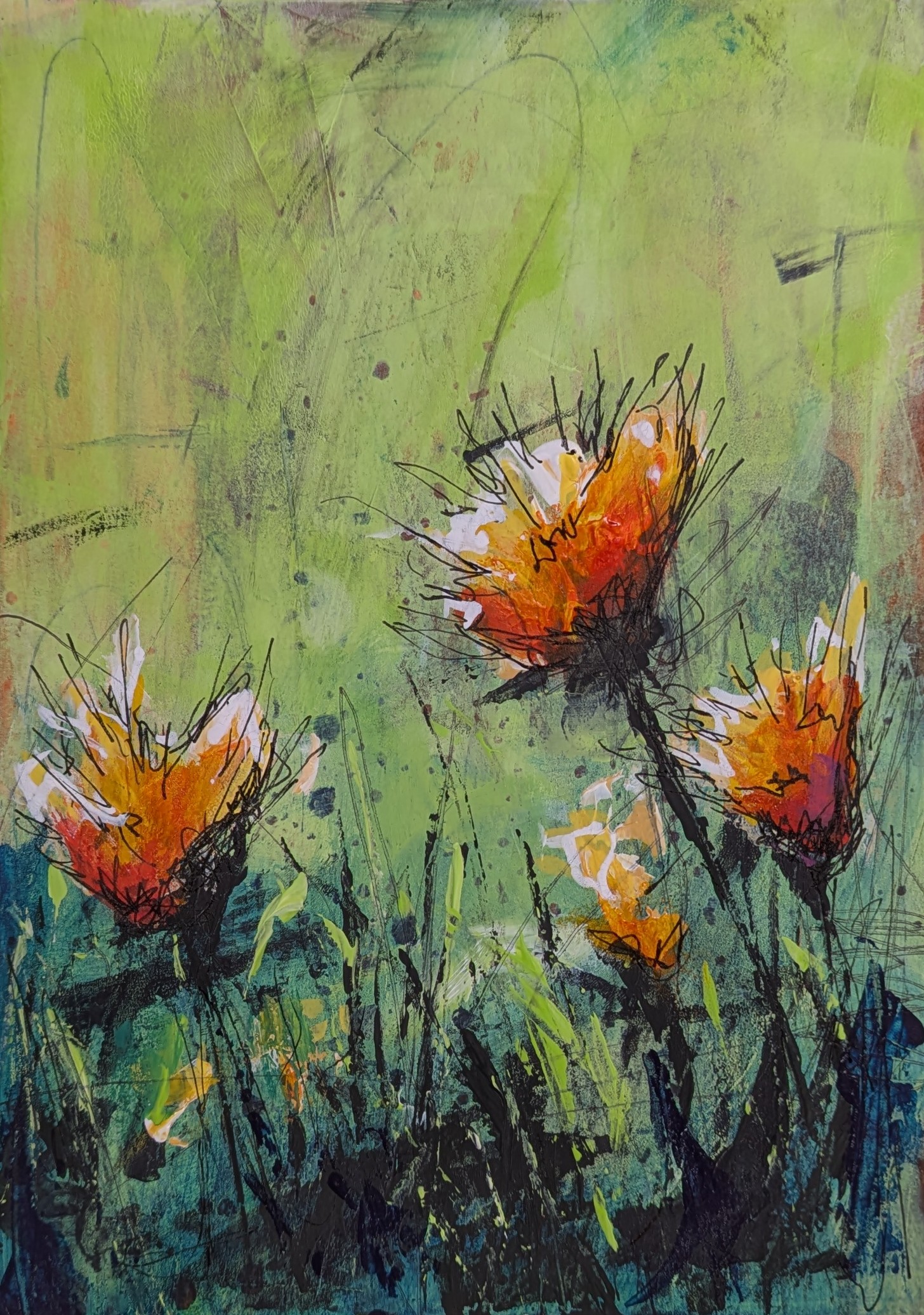
Capturing Nature’s Energy Through Intuitive Abstract Painting
Why Abstract Painting Inspired by Nature Feels So Natural
Nature moves in rhythms rather than straight lines. It grows, overlaps, shifts, and finds balance through variation. Abstract painting inspired by nature taps into that same organic logic. Instead of copying what we see, we respond to movement, energy, and feeling—allowing stems, wind, or growth patterns to emerge through suggestion rather than definition. This approach feels intuitive because it mirrors how nature actually behaves.
Expressive Abstract Painting Techniques That Capture Energy
Expressive abstract painting techniques focus on gesture, layering, and mark-making rather than precision. Loose brushstrokes, unexpected color interactions, and varied pressure all contribute to a sense of motion. By staying responsive instead of planned, we allow the painting to guide us forward, creating work that feels alive and energized rather than controlled.
Painting Nature Abstractly Through Layers and Mark-Making
Layering can be essential when painting nature abstractly. Thin washes can establish atmosphere, while bolder shapes and lines add structure and movement. Marks made with brushes, pens, or other tools break up surfaces and introduce rhythm. Each layer responds to the one beneath it, much like growth in the natural world, creating depth and visual conversation.
Using Small, Timed Studies to Explore Organic Movement
Working small and within a time limit removes pressure and encourages experimentation. These quick studies allow us to explore color relationships, movement, and composition without worrying about a finished result. Over time, they build confidence and often lead to discoveries that translate naturally into larger abstract paintings.
What Nature-Inspired Abstract Painting Teaches Us
Nature-inspired abstract painting reminds us that creativity thrives on trust and curiosity. When we let go of perfection and respond intuitively, we strengthen both our technical skills and our creative confidence. Painting this way reconnects us with rhythm, balance, and the beauty of imperfection—inviting us to stay present, exploratory, and open to unexpected outcomes.
Frequently Asked Questions About Abstract Painting Inspired by Nature
What is abstract painting inspired by nature?
Abstract painting inspired by nature focuses on capturing movement, energy, and rhythm rather than realistic detail. Instead of painting specific plants or landscapes, artists respond to natural patterns like growth, wind, light, and balance through color, layering, and mark-making.
Do I need to paint realistic subjects to use nature as inspiration?
Not at all. Painting nature abstractly is about suggestion, not depiction. You can hint at stems, leaves, or organic movement without defining them, allowing the painting to remain expressive and open to interpretation.
What materials work best for expressive abstract painting techniques?
Acrylic paint works well because it layers easily and dries quickly, but expressive abstract painting can include pens, charcoal, pastels, or paint markers. Mixing tools often adds contrast and energy to the surface.
Why use small, timed studies for abstract painting?
Small, timed abstract painting prompts and studies reduce pressure and encourage intuitive decision-making. They help artists explore color, movement, and composition freely, often leading to stronger ideas and increased creative confidence.
How does painting intuitively improve my abstract work?
Painting intuitively builds trust in your instincts. By responding to what’s happening on the surface rather than planning every move, you develop a stronger sense of rhythm, balance, and personal style over time.